A Contemporary Short Story About a Family Reunion: Full Story

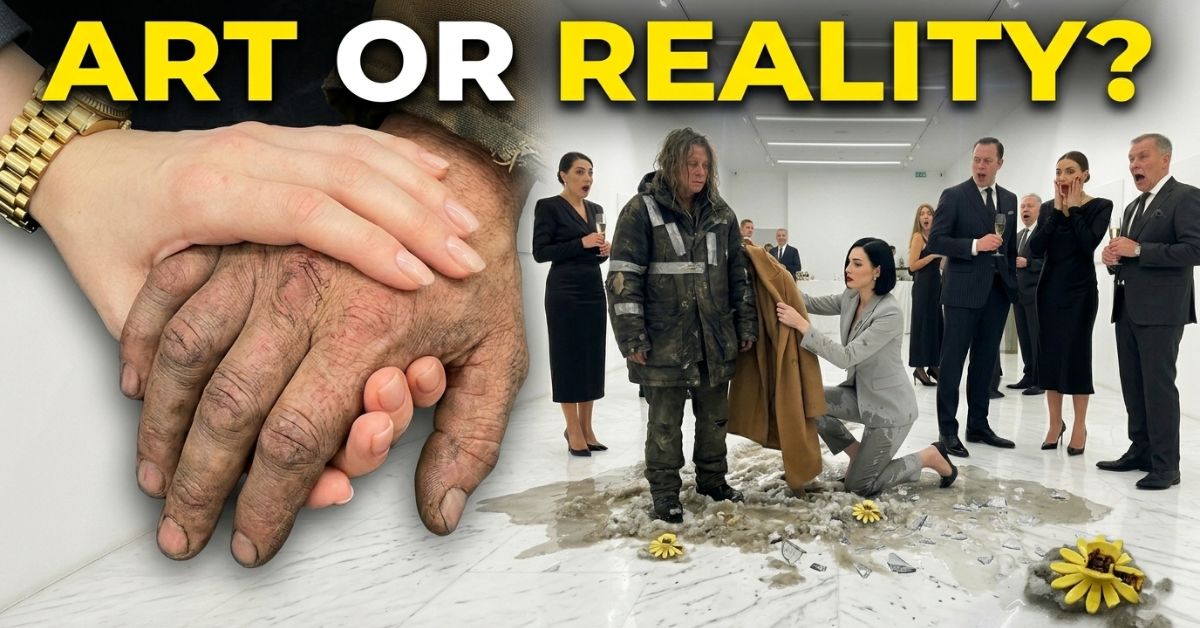
The halogen track lighting in the Chelsea gallery hummed at a frequency that felt like a needle pressing lightly against the base of the skull. It poured down the sheer, blinding white walls like bleached water, hitting the polished Carrara marble floor and bouncing back up to illuminate the dustless air. The space was a vacuum. A hermetically sealed cube of extreme wealth parked on the edge of the Hudson River. Outside the floor-to-ceiling plate glass, November was throwing a tantrum. Sleet whipped sideways in the dark. It lashed against the glass like thrown gravel. Inside, the climate control kept the room at a perfect, unchanging sixty-eight degrees. It smelled of ozone, rare orchid arrangements, and the faint, bitter metallic tang of expensive champagne.
Giant canvases dominated the pristine walls. Bruised purples. Harsh, violent streaks of cadmium red. Art designed to make people who felt nothing suddenly feel something safely. The patrons milled about in hushed clusters. Men in bespoke charcoal suits that cost more than a midwestern farmhouse. Women draped in architectural black silk that whispered softly when they shifted their weight. They held crystal flutes by the stems. They nodded at the canvases. They did not look at the storm outside.
Claire stood near the center pillar. She was the architect of this vacuum. Her posture was a masterclass in tension, an unbroken vertical line from the heels of her patent leather pumps to the sharp, severe cut of her dark hair. Her skin looked like porcelain poured over steel wire. She watched the buyers. She calculated the shifting dynamics of the room. The hedge fund manager from Connecticut was eyeing the large abstract near the coat check. The critic from the Times was frowning at his notebook. Claire took a shallow sip of Dom Perignon. The bubbles bit the roof of her mouth. Everything was proceeding exactly as it should. Order. Control. Silence.
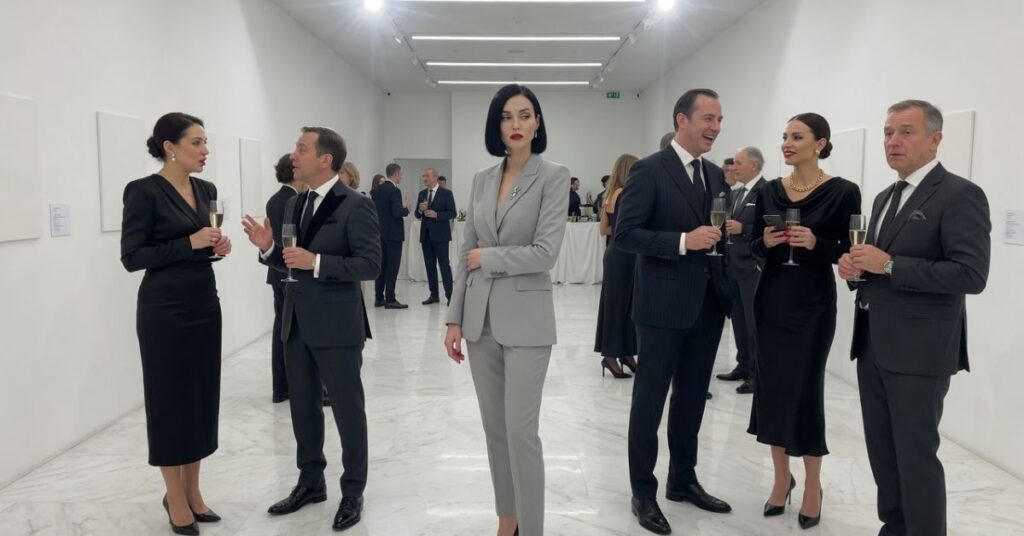
Then the heavy glass entrance door shuddered.
The private security detail, a man named Russo, had stepped away to the restroom. Just for a minute. The wind caught the thick glass slab and wrenched it open. A brutal gust of freezing air violently displaced the gallery’s perfect atmosphere. It hit the crowd like a physical blow. Silk fluttered. Champagne spilled onto a cuff. The smell of the street invaded the room in an instant. It smelled like wet asphalt, rotting cardboard, and stale pennies.
She stepped over the threshold.
She did not belong. The woman was small, folded inward beneath layers of decaying fabric. An oversized men’s parka, once navy but now stained an oily gray, hung off her frame, patched at the elbows with peeling silver duct tape. Her boots were unlaced. The right one was wrapped in a translucent plastic grocery bag. Melted gray slush dripped from the plastic onto the spotless Carrara marble. Drip. Drip.
The room froze. Conversations snapped off. The hum of the lighting suddenly seemed deafening.
The woman shuffled forward, dragging a frayed canvas tote bag that clinked softly with hidden glass. She was muttering. A low, rhythmic stream of fractured syllables. Her chin rested on her chest. Her hair was a matted, tangled bird’s nest of iron gray and dirt-stained white. She smelled of wet wool and deep, unwashed copper.
The reaction of the elite was immediate and visceral. It was a synchronized, silent choreography of disgust. The hedge fund manager took three rapid steps backward, his lip curling up to expose his bottom teeth. A woman in a silver slip dress pressed a manicured hand over her nose and turned her face away entirely. They did not speak to the woman. They did not acknowledge her humanity. They looked at her the way one looks at a ruptured sewage pipe in a dining room.
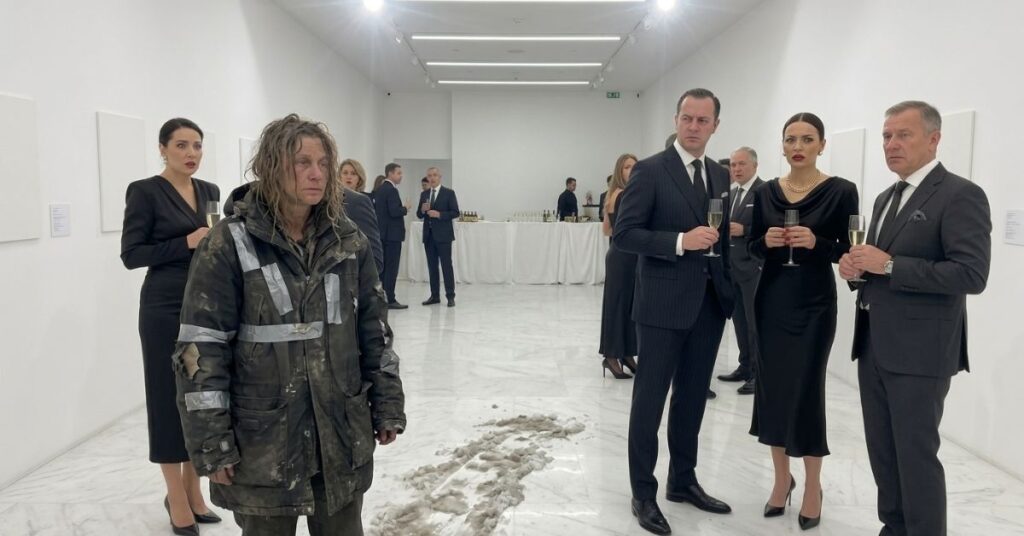
Russo emerged from the back hallway. He saw the puddles. He saw the woman. His face flushed a dark, violent red. He tapped his earpiece, gesturing sharply to a second guard near the catering station. Heavy footsteps echoed like gunshots against the marble.
Claire did not move. Her fingers tightened around her glass.
“Hey,” Russo barked. His voice was too loud for the gallery. Rough. Working-class Queens cutting through the refined murmur. “Hey. You can’t be in here. Out.”
The woman did not look up. She kept shuffling toward the warmth of the central heating vent. “Gotta get the transfer. The blue line. They took the tokens away. Just need a token.” Her voice was like dry leaves scraping on concrete.
Russo reached her. He didn’t ask again. He reached out with a large, meaty hand and grabbed the heavy collar of her ruined parka.
The physical contact was sudden. Violent. He yanked her backward toward the glass doors. The woman let out a high, thin wail. A terrifying sound. It sounded like a rabbit caught in a trap. She flailed, her arms twisting wildly beneath the heavy coats.
The sudden jerking motion snapped the woman’s head back. The tangled nest of her hair whipped through the air.
Something dislodged.
It sailed in a short arc. A tiny, bright projectile against the stark white walls. It hit the floor.
Clack.
The sound was sharp. Distinct. The object skittered across the polished marble, spinning rapidly before coming to a dead stop exactly three feet from the tip of Claire’s patent leather shoe.
Claire looked down.
The breath left her lungs. Her diaphragm locked. Her heart executed a single, heavy thud against her ribs that vibrated into her jaw.
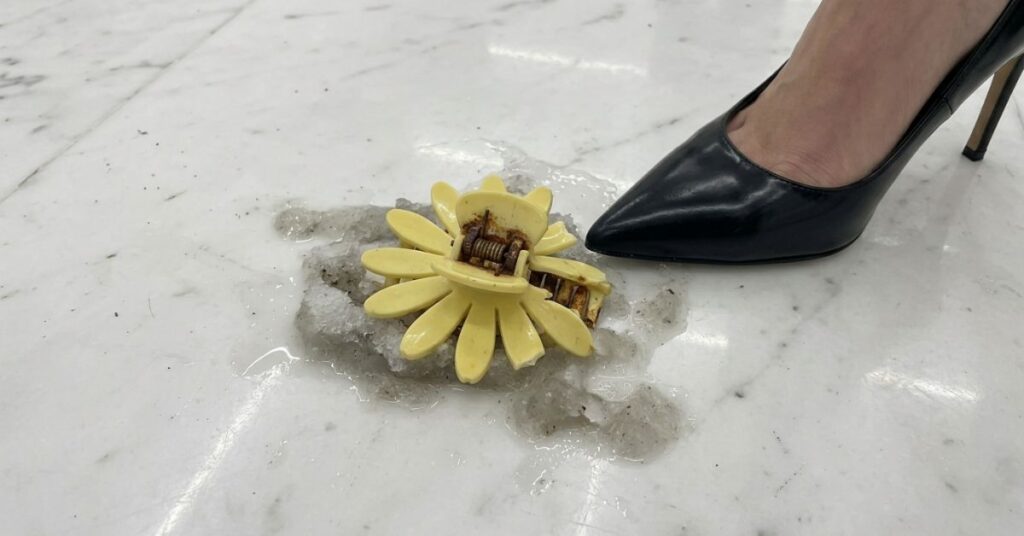
It was a hairclip. Cheap plastic. A yellow daisy.
The color was faded by decades of sun and grease. Two of the plastic petals on the right side were cleanly snapped off. The yellow paint was chipping near the center, revealing cheap, porous white plastic beneath. The metal spring hinge in the middle was choked with rust.
The gallery vanished. The halogen lights, the million-dollar paintings, the smell of orchids. Gone.
A violent phantom memory crushed the air out of Claire. The smell of a rainy bus station waiting room. A sticky vinyl seat. A heavy, hollow wooden door clicking shut with finality. Thirty years. A lifetime built on relentless, punishing perfection to bury the echo of that door clicking shut. Upstairs, in the penthouse she owned outright, behind a biometric lock, inside a fireproof steel safe, sat a small velvet jewelry box. Inside that box was a cheap plastic yellow daisy. Missing its bottom leaf. The exact twin. The set.
Russo yanked the woman again. The canvas bag hit the floor. A bottle shattered inside it. Brown liquid seeped through the canvas. The woman dropped to her knees, crying now, scratching at the marble floor with bleeding cuticles, trying to gather the wet canvas.
The patrons murmured. Someone called for the police.
Claire’s fingers went numb. The crystal flute of Dom Perignon slipped from her grip. It shattered against the floor, raining shards of glass and golden liquid over her shoes. She didn’t blink.
“Stop.”
The word was not yelled. It was spoken at a completely normal volume. But it possessed a density, a chilling, absolute authority that cut the room in half.
Russo froze. He looked back at Claire, his hand still twisted in the filthy fabric of the parka.
“Let her go,” Claire said. Her voice was completely flat. Dead.
“Ms. Vance, she’s bleeding on the floor, she’s a—”
“Take your hand off her coat this instant.”
The hedge fund manager scoffed. The critic raised an eyebrow. Russo slowly uncurled his fingers. He took a large step back, holding his hands up defensively.
Claire moved. She walked forward. Her heels crunched over the broken crystal of her own glass. She didn’t look at the patrons. She didn’t look at Russo. She looked only at the shaking pile of wet fabric on the floor.
Also Read: More Inspirational Stories
She stopped in front of the woman. The smell of oxidized copper and decay washed over her. Claire reached up to the lapels of her own coat. It was a custom-tailored piece. Pure camel hair and spun cashmere. Ten thousand dollars of warmth and untouchable status. The silk lining rustled like dry leaves as she slipped it off her shoulders.
The air in the gallery felt heavy. Solid.
Claire knelt. The wet slush and spilled alcohol soaked instantly into the knees of her tailored wool trousers. She ignored the cold dampness against her skin. She leaned forward and draped the heavy cashmere coat over the woman’s shivering, hunched back. She pulled the lapels tight around the woman’s neck, covering the duct tape. Covering the dirt.
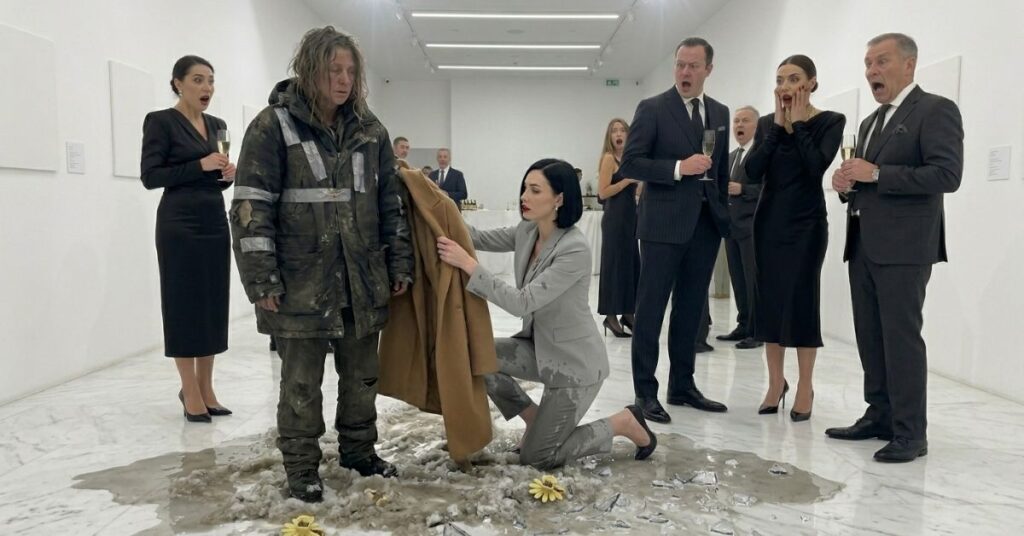
The woman flinched violently at the touch. She sucked in a jagged breath. Then, the immense, terrifying warmth of the cashmere registered. She stilled. Slowly, she looked up.
Her eyes were cloudy. Thick with cataracts and decades of unfiltered exhaustion. They were the exact same shade of pale, icy blue as Claire’s.
Claire did not speak. She reached out. Her pale, perfectly manicured hands grasped the woman’s elbows. She stood up, pulling gently. The woman resisted for a second, then allowed herself to be hoisted to her feet.
Claire guided her. She kept her arm securely wrapped around the cashmere-draped shoulders. They walked together. The tall, sharp art dealer and the broken, shuffling ghost. They walked straight through the center of the crowd.
The elite parted like water. They stumbled backward. A woman gasped audibly. The critic pressed himself flat against a canvas to get out of the way. Disgust had been replaced by a raw, uncomprehending shock.
In the absolute center of the gallery sat the viewing sofa. Deep, charcoal velvet. Impeccably clean. Placed precisely for the optimal viewing angle of a two-million-dollar splash of cadmium red.
Claire guided the woman to the sofa. She gently pressed down on the cashmere shoulder. The woman sank into the plush velvet. It yielded to her slight weight.
Claire sat down right beside her. No space between them. The wet, dirty fabric of the woman’s trousers pressed against Claire’s pristine leg.
The room was a tomb. No one spoke. No one breathed. The only sound was the howling wind rattling the thick glass doors.
Claire looked down. The woman’s hands were resting in her lap. The skin was like cracked, dried leather. Deep fissures of dirt were permanently packed beneath thick, broken nails. The knuckles were swollen with arthritis.
Claire reached out. She took the woman’s left hand.
The contrast was stark, violent, and undeniable. Claire’s hand, soft, pale, adorned with a heavy gold Cartier watch at the wrist, wrapping tightly around the filthy, calloused fingers. Claire squeezed. Hard. Anchoring the woman to the earth. Anchoring herself.
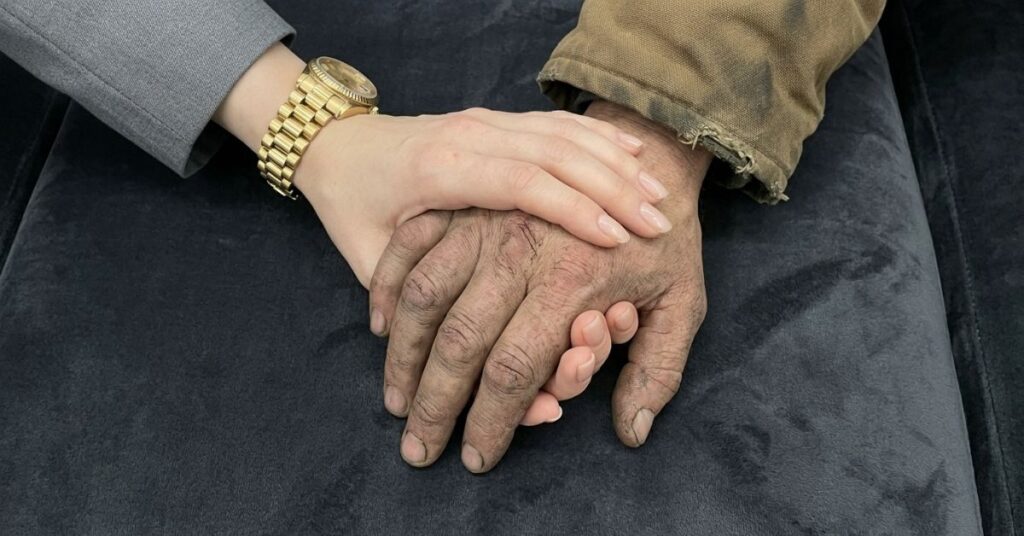
The woman looked down at their joined hands. A slow, confused furrow appeared between her brows. She stopped muttering.
Claire kept her eyes straight ahead, staring blankly at the two-million-dollar canvas on the wall. She did not cry. Her face remained a flawless mask of porcelain and steel. But she did not let go. She sat under the harsh, humming light, holding the broken hand tightly in her own, as the city froze outside the glass.